ServicesExtractions
Children's Tooth Extractions in Southborough
Sometimes a tooth has done all it can, whether it's a primary molar or an adult tooth. We take it out carefully, tell you why it can't stay, compare that with the long-term cost of keeping it, and plan how your child's smile fills in next.
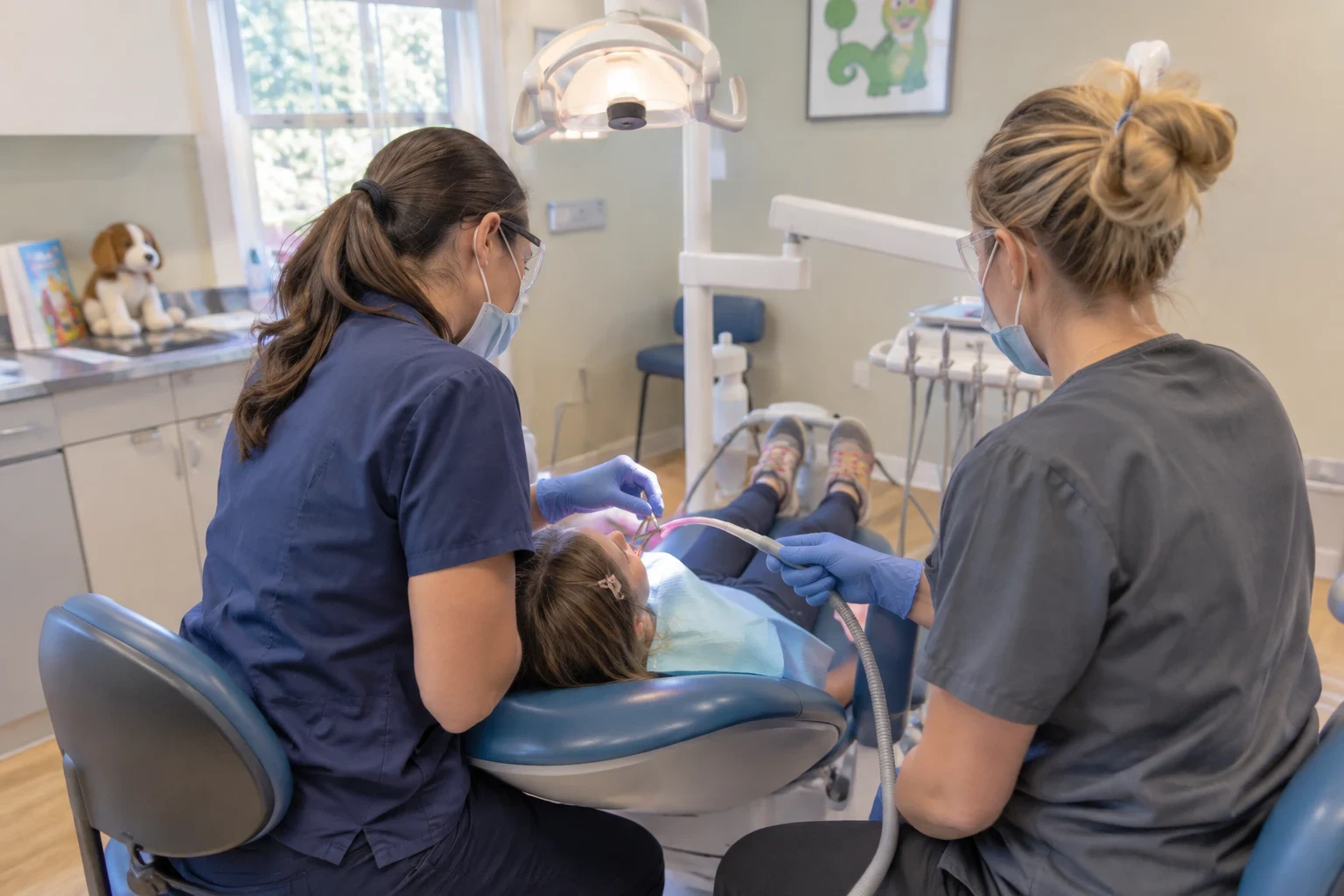
When removing a tooth is the right call
An extraction is rarely our first suggestion. A cavity caught early is usually better served by one of our fillings or a pediatric crown, and an infected baby molar can sometimes be kept with a root canal. We look at how long the tooth still needs to hold its place before the adult tooth arrives. Then we weigh that against the care it would take to keep it there.
Some teeth are better out. These include a baby tooth with a deep abscess, a tooth broken below the gumline, a baby tooth blocking an adult tooth, or a tooth that needs to come out for orthodontic planning. In those cases, removing it cleanly protects the tooth developing underneath and spares your child repeat visits for a tooth that would not last.
We talk through both paths with you, including what each one involves now and what upkeep it would need later, so the choice still makes sense a few years from now.
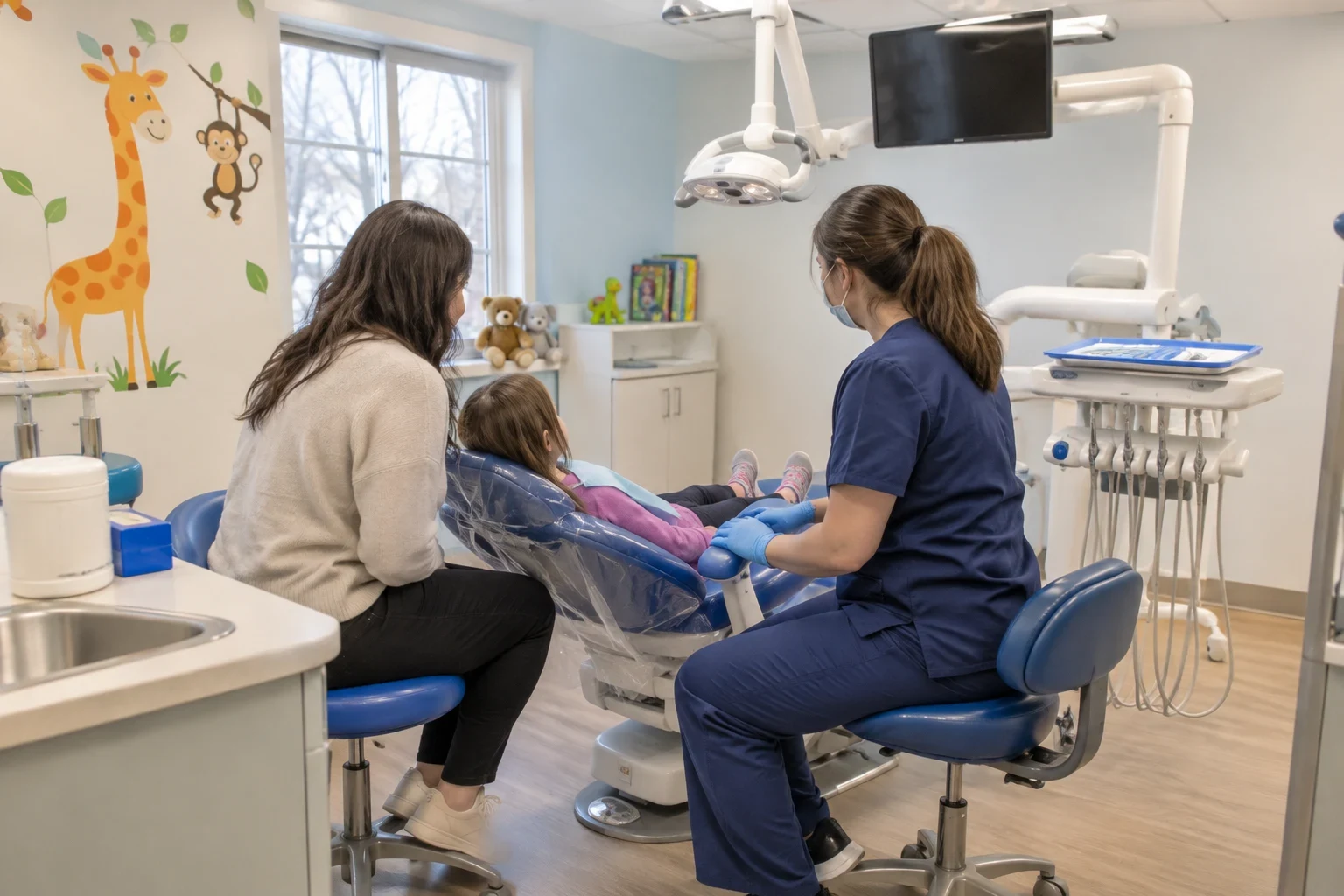
What your child's extraction includes
- 01
X-rays first
An image shows the roots, any infection and the position of the adult tooth. From that, we know whether removal is truly necessary and how involved it will be.
- 02
Unhurried numbing
A fruit-flavored gel goes on the gum before the anesthetic, which we deliver slowly, then we pause until the area has no feeling. Each step is explained in kid-friendly terms ahead of time.
- 03
Comfort options for anxious kids
When a child is very nervous or several teeth need to come out, we can go over the choices explained on our Sedation Dentistry page.
- 04
A plan for the gap
A baby molar lost years ahead of schedule can let neighboring teeth shift into the space. We check whether one of our space maintainers makes sense, since holding the space now is often easier than fixing crowding later.
- 05
Written aftercare for parents
You go home with clear notes on gauze, food and pain relief, and on what normal healing looks like over the following days.
Questions about Extractions?
Call(508) 440-4007Signs your child's tooth may need to come out
A bump on the gum
A small pimple-like bump near a tooth often points to an abscess. In a baby tooth with heavy decay, removal may be the safest way to protect the adult tooth below.
Two rows of teeth
Adult front teeth sometimes come in behind baby teeth that haven't loosened. If the baby tooth stays put for weeks, it may need help.
A tooth cracked below the gum
Falls at the playground or during sports can split a tooth in a way a crown or filling can't fix.
Pain that keeps coming back
Toothaches that wake your child at night or return after a filling deserve a prompt exam.
A baby tooth that won't loosen
Occasionally a baby tooth fuses to the bone and stays while its neighbors fall out. An x-ray shows whether it is holding up the adult tooth.
How the visit goes
- 1
Exam and honest options
We examine the tooth, review the x-rays and explain whether it can be saved, what that would involve, and why removal may be the better long-term choice. You decide before anything is scheduled.
- 2
Getting comfortable
Your child settles into the chair, with a parent nearby when that helps. We numb the area and confirm it is fully numb before we begin.
- 3
A gentle removal
Most baby teeth come out in a few minutes with steady pressure rather than force. Your child may feel pushing but should not feel sharp pain.
- 4
Gauze, a short rest, then home
We place gauze, make sure bleeding is settling, and go over aftercare with you. If a space maintainer makes sense, we discuss timing before you leave.
What shapes the cost of an extraction
Each fee reflects the specific tooth and the care needed to take it out safely. We go over it with you before any treatment, side by side with the cost of saving the tooth and the follow-up each path would bring. Payment by MasterCard, Visa or Discover works here, as do most insurance plans and the CareCredit Patient Payment Plan.
- Baby tooth or adult tooth
- Primary teeth have short roots that are often partly resorbed, which usually makes removal straightforward. Permanent teeth are anchored by longer roots and can take more time.
- Position and condition
- A tooth snapped off at the gumline, fused to the bone or only partly erupted calls for more careful work than one that is already wiggly.
- Comfort and sedation
- Local anesthetic comes with every extraction. Sedation, when a child needs it, is its own part of the visit and carries a separate cost.
- Care after removal
- A space maintainer adds to today's cost but can head off crowding that would need longer, more involved treatment down the road. We say plainly whether your child needs one.
- Your coverage
- Benefits differ widely between plans. Before the visit, we can help you see what your plan generally pays toward an extraction.
Questions parents ask about extractions
Will my child be awake during the extraction?
Most kids stay awake with local numbing and handle it well, particularly for baby teeth. When a child is very anxious or the visit will run longer, we discuss sedation with you. Our recommendation is what suits your child, not the most involved option.
Why not let a decayed baby tooth fall out on its own?
Some baby teeth hang on for years. An infected one can hurt, spread infection and harm the adult tooth developing underneath. If the tooth is nearly ready to come out, waiting may be reasonable. Otherwise, treating or removing it is usually the wiser choice.
Does my child need a space maintainer after a tooth is pulled?
Not always. Losing a front baby tooth rarely calls for one. A back molar lost years early often does, since nearby teeth can lean into the gap and crowd out the adult tooth. We look at your child's age and x-ray before suggesting one.
What should my child eat afterward?
For the first day, stick with soft, lukewarm or chilled options such as mashed potatoes, smoothies eaten with a spoon, oatmeal or scrambled eggs. Hold off on straws and steaming-hot food for at least a day. While the numbness fades, watch that your child doesn't bite their lip or cheek.
How long does healing take?
Most kids are back to normal within a day or two, and the gum fills in over roughly the next week. Phone us if swelling increases, bleeding continues despite firm gauze pressure, or your child runs a fever.
Do you see kids from nearby towns?
Yes. Our office welcomes families from Framingham, Marlborough, Westborough, Hopkinton and other towns around Southborough.
Talk through your child's options with us
If a tooth is bothering your child or you've been told it needs to come out, we'll look carefully and explain what saving or removing it would mean over time. New families can register by phone.