ServicesPediatric Crowns
Pediatric Crowns in Southborough
Once decay has left too little sound tooth to anchor a filling, a crown wraps the whole tooth and keeps it working. We help you compare materials, how many years the tooth still needs to serve and what each option asks of your child, so the choice holds up over time.
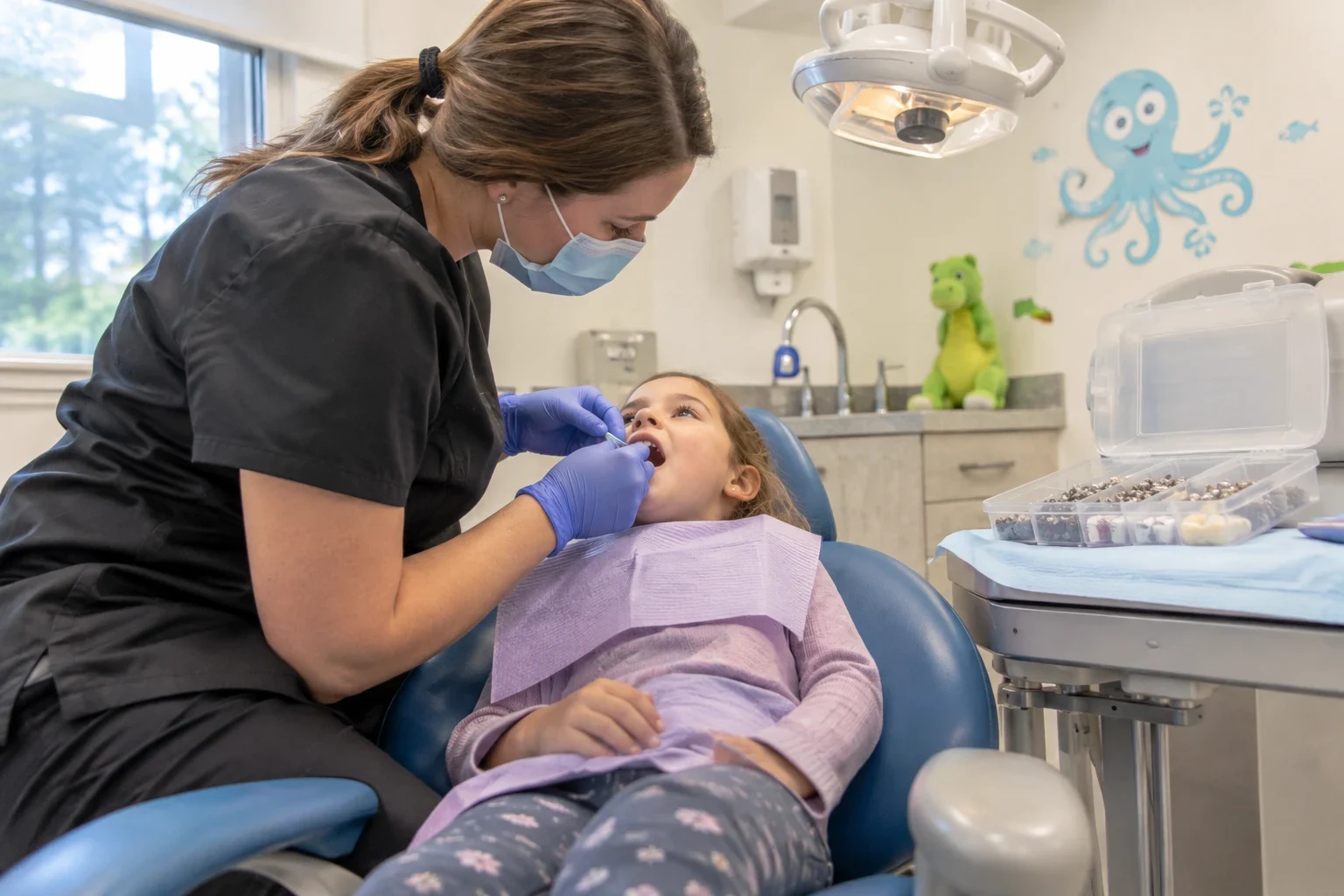
A crown keeps a weak tooth working until its time is up
A pediatric crown is a small cap that fits over the whole tooth. We use it when a baby molar has decay on several surfaces, after pulp treatment, or when a tooth has formed with weak enamel. A large filling in those teeth often cracks or leaks within a few years, which means another visit, more numbing and sometimes losing the tooth early.
Baby molars stay in place until roughly age ten to twelve. Kept healthy, they guide the permanent teeth into position and let your child chew comfortably in the meantime. A crown placed at age four may serve six or more years with very little upkeep, and that long stretch is why it is often the better value than repeating a filling.
Families from Southborough and nearby towns such as Westborough and Hopkinton often ask us which crown is right. The honest answer depends on the tooth, your child's habits and how many years that tooth still has to go.
What your child's crown visit includes
A clear look at the tooth
We take X-rays and check how deep the decay runs before recommending anything. You see the images and hear plainly whether a filling could still hold or a crown is the longer-lasting choice.
Stainless steel crowns
These preformed caps are the long-standing standard for back baby teeth. They are durable, they can be fitted with very little shaping, and they rarely need attention once placed. The tradeoff is the silver color.
Tooth-colored zirconia crowns
Zirconia is a hard ceramic that looks like natural enamel and resists staining. It needs a little more shaping of the tooth and a dry, cooperative appointment to place well, so we only suggest it when the tooth and your child are a good fit.
Front tooth options
For upper front baby teeth, we may use zirconia or a tooth-colored resin strip crown. Resin goes on gently and is easy to touch up, though it wears faster than ceramic.
Pulp care when needed
If decay has reached the nerve, the crown is usually paired with pulp treatment, described on our Root Canals page. Doing both in one visit means one round of numbing.
Bite check and aftercare
Before your child leaves, we check the bite and talk you through brushing, flossing and which sticky foods to limit around the new crown.
Signs your child's tooth may need a crown
Decay on more than one side
When a cavity wraps around two or three surfaces of a molar, there is often too little healthy tooth left to anchor a filling.
A filling that keeps failing
A filling that has chipped, darkened at the edges or been redone suggests the tooth needs full coverage.
Chalky or crumbling enamel
Some kids have molars that form with soft, discolored enamel. These teeth can be sensitive and break down quickly, and a crown protects them well.
After a pulp treatment
A baby tooth that has had its nerve treated becomes more brittle. Covering it with a crown keeps it from splitting.
A cracked or broken front tooth
A fall can chip a front baby tooth badly enough that bonding alone will not stay put.
How the appointment goes
- 1
Settling in
We start slowly, letting your child meet the tools and hear what will happen in kid-sized language. Children who are very anxious or need several teeth treated may be more comfortable with an option from our Sedation Dentistry page, which we talk through with you beforehand.
- 2
Numbing and cleaning out decay
We numb the area gently, then remove the decay and any weak enamel so the crown sits on sound tooth.
- 3
Shaping and fitting
We shape the tooth slightly and try in crowns until one fits snugly at the gumline. A good fit matters most, because it keeps food and bacteria from slipping underneath.
- 4
Cementing and checking the bite
The crown is cemented in place and we check that your child bites evenly. Most crowns are finished in one appointment, with no temporary crown and no second trip.
What shapes the cost of a crown
Before any work starts, we walk you through the cost of your child's treatment so you can weigh it against how many years the crown has to serve. Dental plans differ in how they cover crowns, and we can help you read what yours includes. For payment, we take MasterCard, Visa and Discover cards, work with most insurance plans, and offer the CareCredit Patient Payment Plan.
- Crown material
- Stainless steel and zirconia carry different fees. Zirconia costs more at the start, while steel tends to last just as long on a back tooth.
- How many teeth
- When several teeth need crowns, treating them together can mean one appointment and a single round of numbing instead of repeat visits.
- Pulp treatment first
- If the nerve needs care, that adds to the visit. It often keeps the tooth in place and avoids an extraction followed by a space maintainer.
- Sedation
- If sedation is the right choice for your child's comfort, it is a separate part of the plan, and we explain it before the day of treatment.
Questions parents ask about pediatric crowns
Something not covered here? (508) 440-4007
Is a crown worth it on a tooth my child will lose someday?
Back baby teeth often hold their place until around age ten to twelve. Losing one early lets neighboring teeth tip into the gap, which can leave the permanent tooth with too little room. A crown keeps that tooth comfortable and holding space for the years it has left, and that is usually simpler than managing an early loss.
Should we choose a silver or a white crown?
Either one can last until the tooth falls out on its own. Stainless steel is forgiving to place and wears well on back teeth. Zirconia looks natural and stays white, but it needs more shaping of the tooth and a calm, dry appointment. We will tell you which suits that particular tooth.
Will it hurt?
The tooth is numbed before we start, so most kids notice pressure rather than pain. The gum around the new crown can feel a little tender for a day or two, and a children's pain reliever usually handles it.
How do we care for the crown?
Brush it twice a day like the rest of the teeth and floss along the gumline. Go easy on very sticky candy, which can tug at a crown. We look at it during the regular visits described on our Exams & Cleanings page.
What if a crown comes loose?
This does not happen often. If it does, save the crown and give us a call so we can see your child and cement it back or place a new one.
Talk with us about your child's tooth
If a dentist has mentioned a crown, or a filling keeps breaking, we can look at the tooth and walk you through the options. New patients start with a quick registration by phone.