ServicesFillings
Children's Fillings in Southborough
We repair cavities in baby and permanent teeth with gentle care and materials chosen for how long each tooth has left to serve. You get a clear explanation of the options, and your child leaves with a comfortable, natural-looking repair.
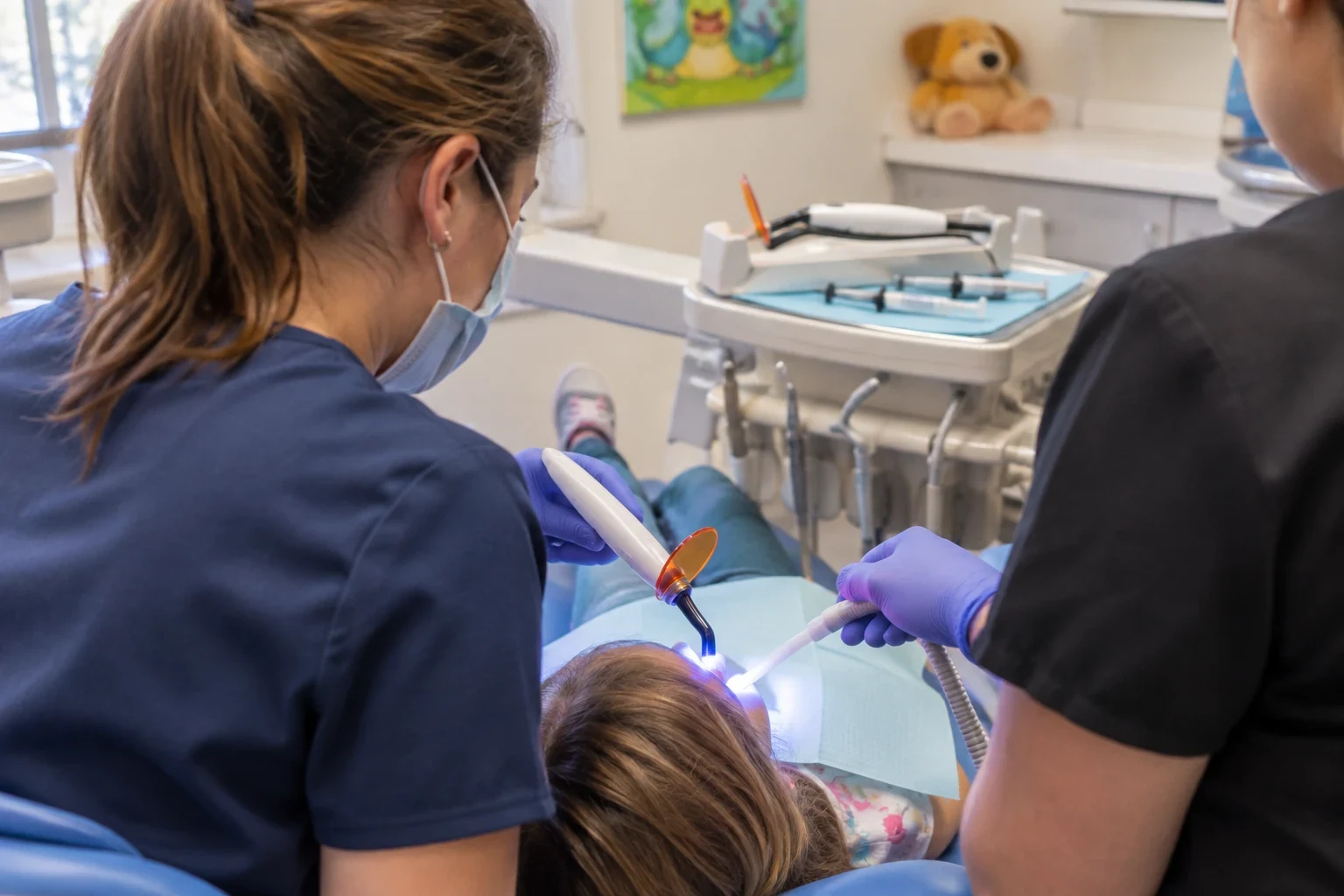
A filling that fits the tooth and the years ahead
When decay weakens part of a tooth, that section has to come out and be rebuilt. We clear away the damaged enamel and dentin, clean the area and restore the tooth's shape with a durable material, so your child can chew normally again and the cavity stops spreading.
The right material depends on the tooth. A baby molar that will fall out in a year needs something different from a permanent molar that has to last decades. We weigh the up-front cost against how long the filling should hold and how much upkeep it may need, so the choice still makes sense a few years from now.
Families come to us from Southborough, Westborough and the surrounding area, and every one hears the same thing first: what we found, what we recommend and why.
What a filling visit includes
A close look and x-rays when needed
We check how deep the decay goes before choosing a repair. Small cavities between teeth often show only on x-rays.
Tooth-colored composite
Composite resin bonds to the tooth and blends with its natural shade. It is a strong choice for permanent teeth and for baby teeth that still have years of chewing ahead.
Glass ionomer for the right cases
This material releases a little fluoride over time, which helps protect the tooth around it. It suits small cavities and baby teeth that are close to coming out.
Numbing done gently
We use a numbing gel first and explain each step in kid-friendly words. Most children feel pressure and vibration, not pain.
Polish and bite check
We shape the filling so it feels like part of the tooth, then check the bite so nothing feels high or rough when your child closes.
Aftercare guidance for parents
You leave knowing when your child can eat, what to watch for and how to keep the filling in good shape.
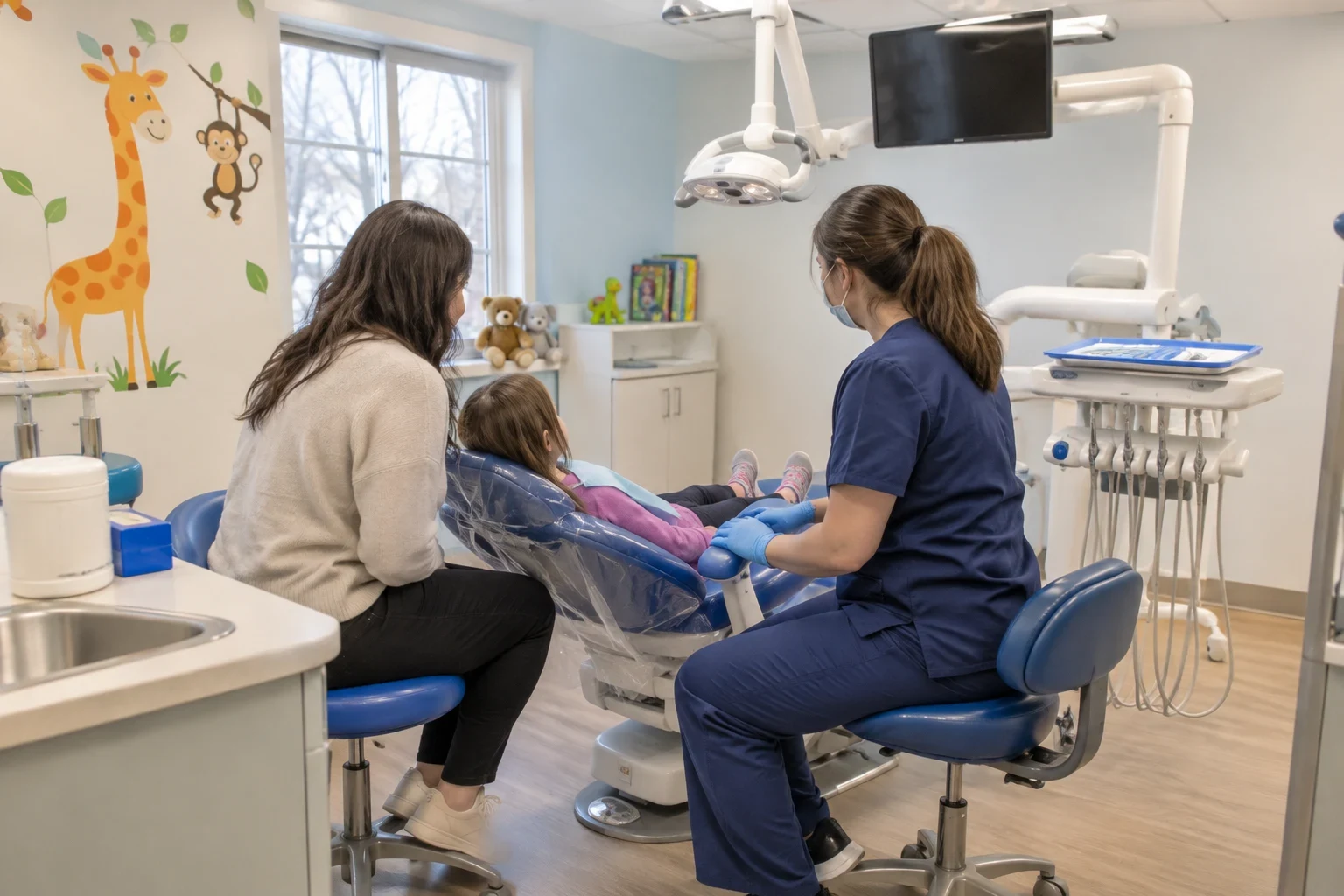
Signs your child may need a filling
- Sensitivity to sweets or cold
- A quick wince with ice cream or juice can mean decay has reached the softer layer under the enamel.
- White, brown or dark spots
- Chalky white patches are early weak spots. Brown or black areas, especially in the grooves of molars, often mean a cavity has formed.
- Food catching in one place
- If food keeps packing between two teeth, there may be a hole or rough edge that floss and brushing cannot clean.
- Meals moved to one side
- Young children seldom complain about a sore tooth. Watch instead for them steering food to one side of the mouth or leaving part of a meal they usually finish.
- A cavity found at a checkup
- Many cavities cause no discomfort at first. Catching them during exams and cleanings keeps the repair small.
How the appointment goes
- 1
We explain the plan
Before we start, we show you what we found and walk through the material options, including how long each is likely to last on that tooth. You decide with the facts in front of you.
- 2
Comfort first
Your child settles into the chair, and we numb the area gently. For anxious kids or larger treatment, we can talk with you about sedation dentistry as a separate option.
- 3
Remove decay and fill
We clear away the softened tooth, keep as much healthy structure as possible and place the filling in layers so it bonds well.
- 4
Shape, polish and check
We smooth the surface, test the bite and make sure it feels natural. Most visits for a single filling are short.
- 5
Home with clear notes
Numbness usually fades within a few hours. We let you know when soft foods are fine and keep an eye on the filling at future visits.
What affects the cost of a filling
The price depends on how large the cavity is, where it sits and which material suits the tooth best. Before any work begins, we explain the options and how each one compares over the years. For payment, we take MasterCard, Visa and Discover cards, work with most insurance plans and offer the CareCredit Patient Payment Plan.
- Size and number of surfaces
- A small pit on one surface takes less time and material than decay that wraps around two or three sides of a tooth.
- Material choice
- Composite and glass ionomer differ in cost and in how long they typically hold. A slightly higher cost can be the better value on a tooth that must last for years.
- Baby tooth or permanent tooth
- How long the tooth will stay in the mouth shapes what makes sense to spend on it. We match the repair to that timeline.
- When a crown is the better fit
- If decay is large, a filling may wear or break sooner. In those cases we may suggest pediatric crowns, which often cost more at first but need less redoing.
- Your insurance plan
- Coverage for fillings and materials varies by plan. We can help you understand what your plan lists.
Questions parents ask about fillings
- Is it worth treating a cavity in a baby tooth if it will come out later?
- Many baby molars stay in place until a child is 10 to 12, and they save room for the permanent teeth growing underneath. Left alone, a cavity can spread, become painful or infected, and cost the tooth before its time. Filling it lets your child chew comfortably until the tooth loosens naturally.
- Will my child be comfortable during the filling?
- A numbing gel goes on first, before the local anesthetic, and we tell your child what is happening at each step. Most kids notice pressure and the sound of the equipment rather than pain. For a very anxious child, we can talk with you about sedation dentistry before the visit.
- Do the fillings match the color of the teeth?
- They do. Composite blends closely with natural enamel, and we choose glass ionomer when its slow fluoride release is the better fit for that tooth. You will hear which material we suggest and the reason for it.
- How many years can a child's filling hold up?
- That comes down to the material, how large the filling is, and your child's diet and brushing habits. A composite filling on a permanent tooth can serve for many years with good care. We look at every filling during regular exams so minor wear is spotted while it is still small.
- What can my child eat after a filling?
- Wait until the lips and cheeks have full feeling again, because a numb mouth makes it easy to bite soft tissue without noticing. For the rest of the day, soft choices like yogurt, soup or pasta work well. Most kids return to their normal foods by the following meal.
- Can sealants help my child avoid future fillings?
- Sealants protect the deep grooves on back teeth, which is where many cavities begin. Combined with fluoride treatment and steady brushing, they can reduce the odds of new decay. They are a preventive step, though, and do not fix a cavity that has already formed.
Ready to have that tooth looked at
Phone us to set up new patient registration or book an appointment for your child. We will find a time that works and explain what to expect at the visit.