ServicesRoot Canals
Children's Root Canals in Southborough
If deep decay or a hard bump has inflamed the nerve inside a tooth, gentle pulp treatment clears the problem and lets the tooth stay. Your child stops hurting, and the tooth keeps holding space for the adult one, which is often the better long-term value than pulling it.
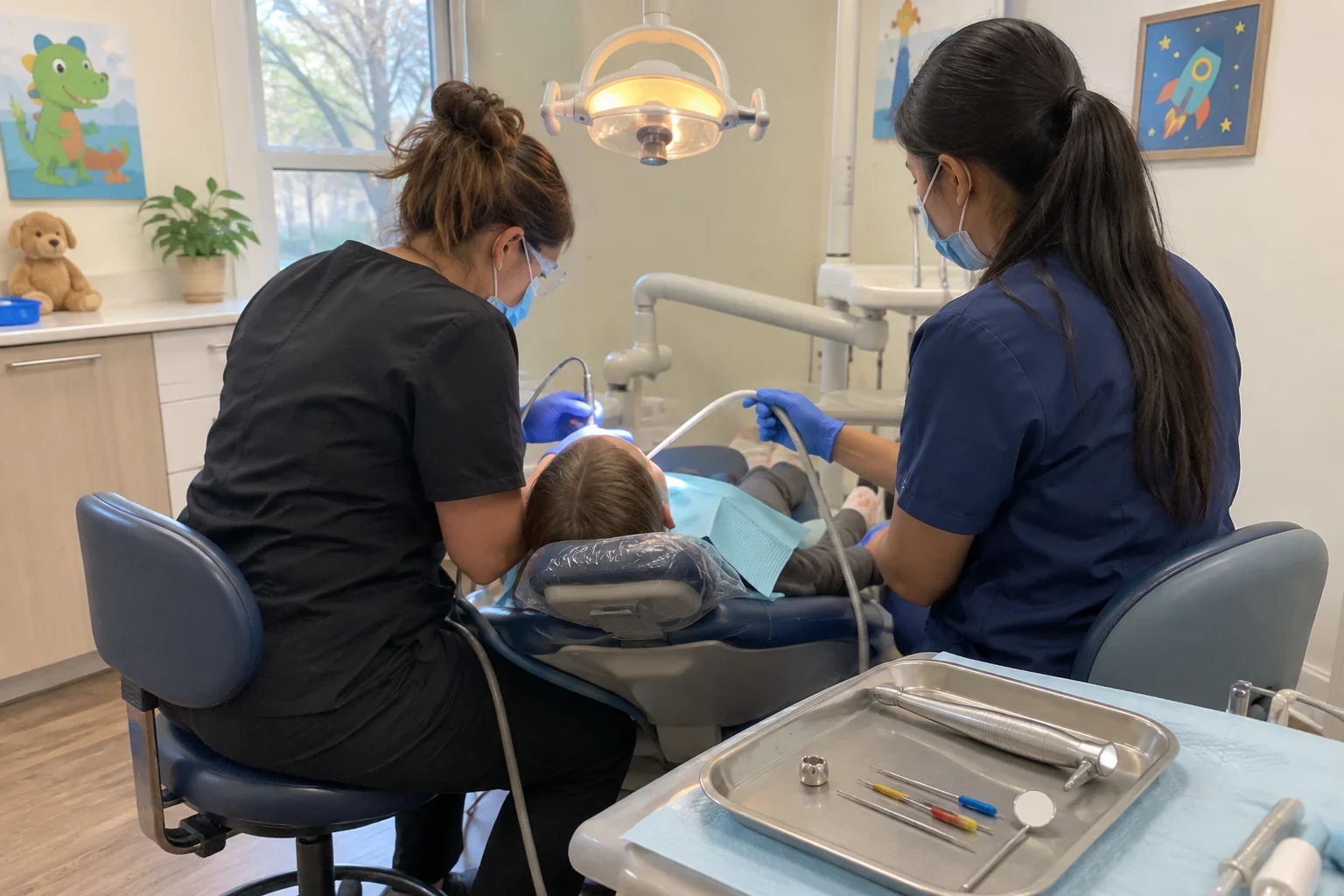
Saving a tooth that still has work to do
Inside every tooth is soft pulp made of nerves and blood vessels. Deep decay or a hard knock can inflame or infect it. For kids, root canal treatment usually means a pulpotomy, where we remove the affected pulp in the crown of a baby tooth, or a pulpectomy, where we clean out the pulp from the roots as well. Permanent teeth get a full root canal suited to how far the roots have developed.
Parents often ask whether a baby tooth is worth the effort. A back baby molar can stay in place until age 10 to 12, and while it is there it guides the adult tooth into position and lets your child chew comfortably. Pulling it early can mean a space maintainer and closer watching for years. Treating it once, and protecting it well, is often the choice that costs less over time.
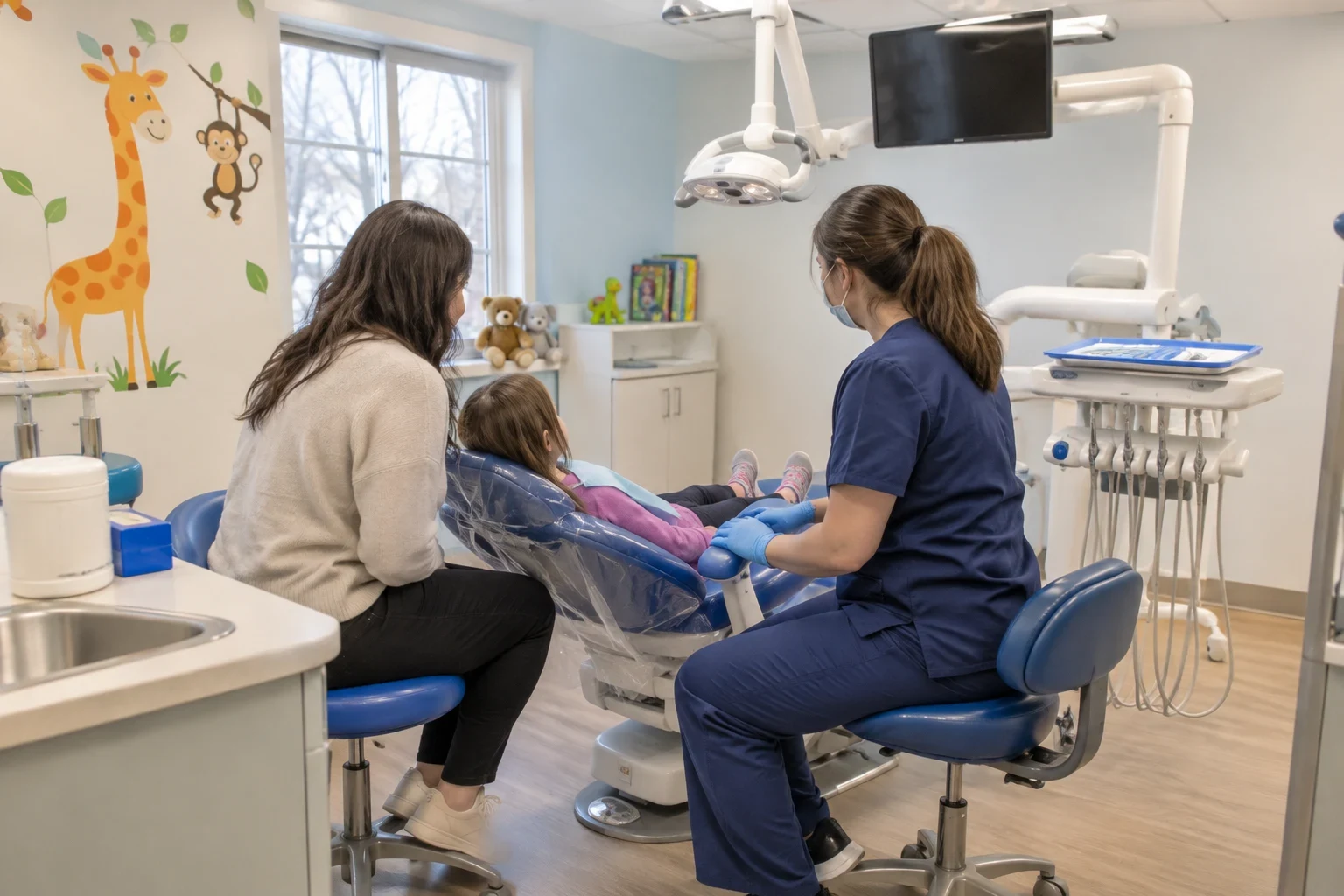
What root canal treatment includes
- 01
Digital x-rays and a clear diagnosis
We look at how deep the decay runs and how close the adult tooth is to coming in. That tells us whether the tooth is worth saving or whether it is near its natural exit anyway.
- 02
Pulpotomy for baby teeth
We remove the inflamed pulp in the top of the tooth, leave the healthy root pulp in place, and seal it with a medicated material that helps it settle.
- 03
Pulpectomy when infection goes deeper
If the root pulp is also infected, we clean the canals and fill them with a paste that dissolves naturally as the baby tooth's roots shrink before it falls out.
- 04
Root canals for permanent teeth
Teens and older kids with an infected adult tooth get a root canal planned around root development, since young roots are still growing and need a careful approach.
- 05
A crown to finish the job
A treated back tooth becomes more brittle, so most get a durable crown afterward. Our Pediatric Crowns page explains the stainless steel and tooth-colored options and how long each tends to last.
Questions about Root Canals?
Call(508) 440-4007Signs your child's tooth may need pulp treatment
Pain that lingers
A twinge from cold that fades in seconds is often minor. An ache that hangs on after the cold drink is gone points to an irritated nerve.
Waking up with a toothache
Pain that shows up at night or without any trigger is a common sign the pulp is inflamed.
A bump on the gum
A small pimple-like bump near a tooth can be an abscess draining. It may not hurt, but the infection underneath still needs care.
A tooth turning gray after a fall
Front teeth that darken weeks after an injury may have a damaged nerve. Worth an exam even if your child says nothing hurts.
Chewing on one side only
Younger kids rarely describe tooth pain clearly. Favoring one side, picking at food or swelling in the cheek are often the clues parents notice first.
How the visit goes
- 1
Exam and talking it through
We check the tooth, take x-rays and explain what we see in plain terms. You hear the options, including what happens if the tooth is pulled instead, before anything starts.
- 2
Numbing and comfort
We use gentle numbing and take our time. For anxious kids or longer visits, nitrous oxide or the options on our Sedation Dentistry page may help.
- 3
Treating the pulp
We remove the affected pulp, clean the space and place the medicated filling. For most baby teeth this part is quicker than parents expect.
- 4
Sealing and restoring
A crown is usually placed in the same visit so the tooth is protected right away. Your child leaves with a tooth that is ready to chew on once the numbness wears off.
- 5
Follow-up at routine checkups
We keep an eye on the treated tooth with x-rays during regular exams and cleanings, so any change is caught early.
What shapes the cost
No two teeth need quite the same work, so the cost breakdown comes after we have seen the exam findings and x-rays. Part of that talk is a side-by-side look at saving the tooth versus removing it and fitting a space maintainer. For payment, we take Visa, MasterCard and Discover, work with most insurance plans, and offer the CareCredit Patient Payment Plan.
- Baby tooth or adult tooth
- A pulpotomy on a baby molar is a simpler procedure than a full root canal on a permanent tooth with several canals.
- How far the infection has spread
- A pulpectomy involves more cleaning and filling than a pulpotomy, which affects time and materials.
- The crown that follows
- Stainless steel crowns and tooth-colored zirconia crowns differ in cost and appearance. We explain how each holds up so you can weigh the choice.
- Comfort and sedation
- Nitrous oxide or deeper sedation adds to the visit, and your plan may treat it differently from the procedure itself.
Root canal questions from parents
Why treat a baby tooth that is going to fall out?
Back baby teeth often stay until the preteen years. Losing one early can let nearby teeth drift into the gap and crowd the adult tooth below. Saving it usually means fewer appliances and less orthodontic work later.
Will it hurt?
We numb the tooth completely before starting, so most kids notice pressure, not pain. Some tenderness around the tooth for the next day or so is normal, and a children's pain reliever generally takes care of it. Many kids actually feel better than they did before, because the infected pulp was what caused the ache.
How long does a treated baby tooth last?
With a well-fitted crown, a treated baby tooth is designed to stay until it falls out naturally. We check it at routine visits to make sure it stays healthy.
Can my child go back to school the same day?
Many do, as long as they wait for the numbness to fade before eating. Children who had sedation should take it easy for the rest of the day under a parent's eye.
Would pulling the tooth be simpler?
Sometimes, especially if the adult tooth is close to coming in. When the baby tooth has years left, extraction often leads to a space maintainer and more visits. We lay out both paths plainly so you can choose what holds up best for your family.
Ready to have that tooth looked at
A phone call gets your child registered as a new patient and on the schedule for an exam. We will look at the tooth and talk you through every option before any treatment begins.