ServicesSealants
Dental Sealants for Kids in Southborough
Sealants are a thin, tooth-colored coating we paint into the grooves of your child's back teeth. There is no drilling and usually no numbing. A visit for sealants takes a few minutes per tooth, and the protection is checked at every cleaning after that.
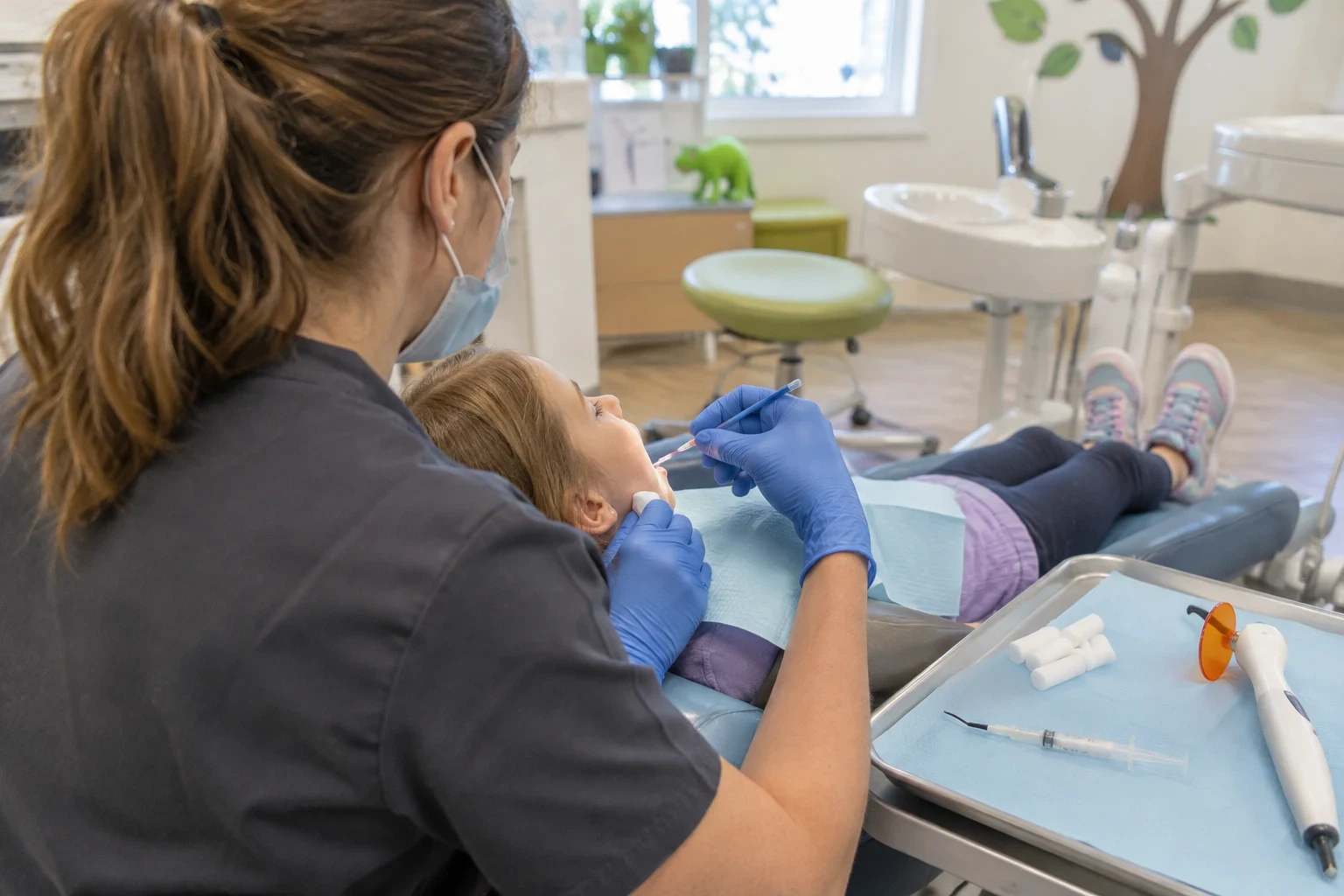
A small step that protects the teeth that work hardest
The chewing surfaces of molars are folded into deep pits and fissures. Some of these channels are so fine that even careful brushing passes right over them, leaving plaque and bits of food tucked inside. Those hidden grooves are where most cavities in kids get their start. A sealant fills them in and leaves a smooth surface that decay has a hard time getting a hold on.
We weigh sealants the way you might weigh any decision meant to last. The appointment is brief and the material is modest, while a filling, plus the care that filling needs later, asks much more of your child's time, comfort and your budget. Placed well on a healthy molar, a sealant is one of the rare treatments that mostly spares you work down the road.
Most often we seal the first permanent molars, which come in around age 6, and the second permanent molars, which follow around age 12. We also check premolars and, now and then, baby molars whose grooves run especially deep.
What a sealant visit includes
A careful look at each groove
Before sealing, we check every surface for early decay. A sealant belongs on a sound tooth, so if we find a soft spot we tell you and explain the options instead of covering it up.
Cleaning and polishing
Each tooth is cleaned so the material bonds to enamel, not to plaque or leftover food.
Keeping the tooth dry
Saliva is the main reason sealants fail early. We use cotton rolls, gentle suction and small isolation tools sized for kids so the surface stays dry while the material sets.
Resin placed and light-cured
The sealant is a flowable resin brushed into the grooves and hardened in seconds with a blue curing light. It sets smooth and nearly invisible.
A bite check
We have your child bite down and adjust any high spot so the tooth feels normal before you leave.
Checks at later visits
At each exam and cleaning we look at the sealants for wear or chips. A worn spot can usually be touched up by adding material, without starting over.
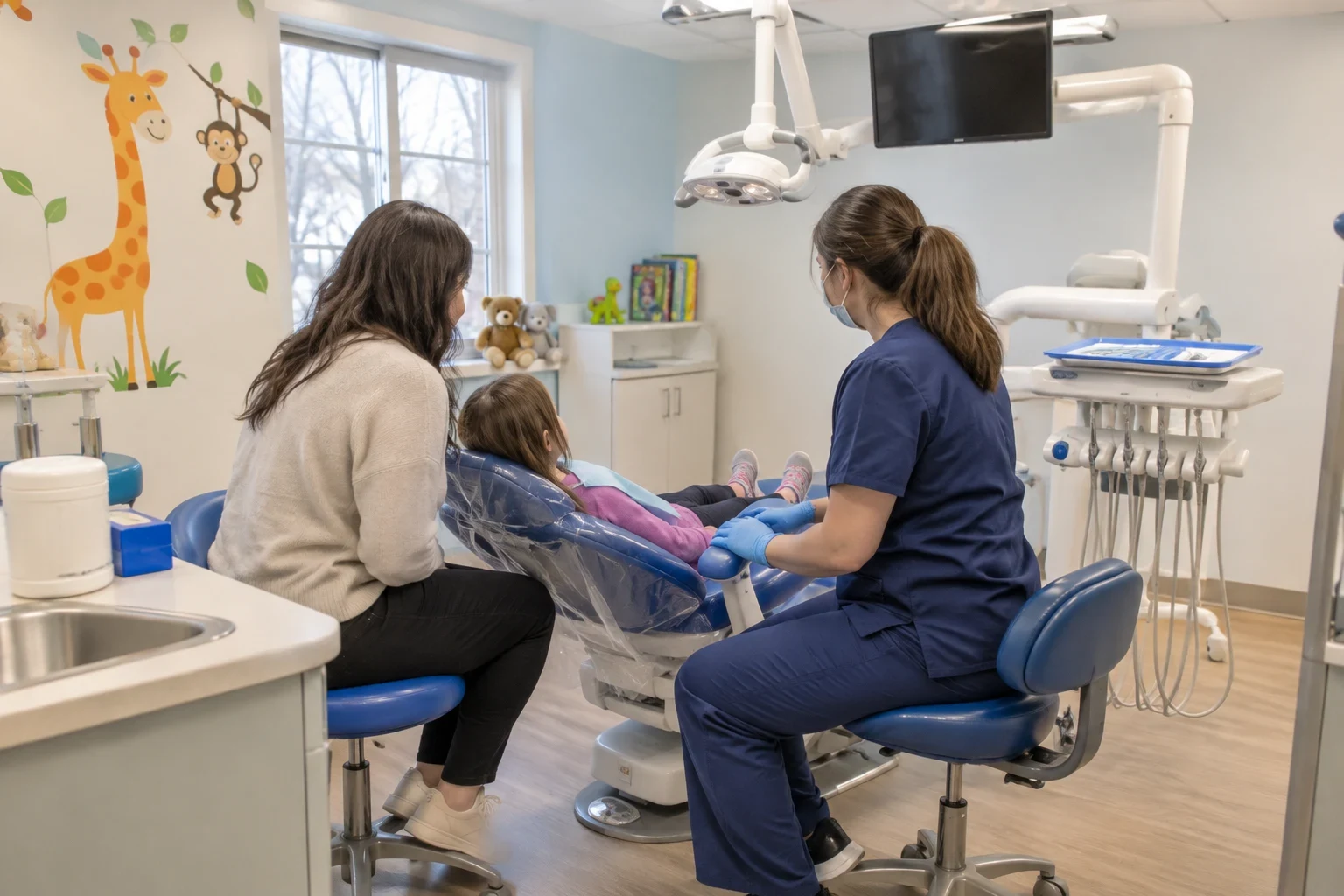
Signs it is a good time to talk about sealants
- New permanent molars
- Once the first or second permanent molars have fully come in, they are ready to seal. Sealing early protects them during the years when kids brush least carefully.
- Deep, stained grooves
- Dark lines in the grooves of back teeth can mean food is collecting there. Sometimes it is only stain, sometimes early decay, and we check which before deciding.
- Past cavities
- If your child has had fillings before, their teeth are telling us decay finds a way in. Sealing the healthy molars lowers the odds of the next one.
- Braces or trouble brushing
- Orthodontic brackets, a strong gag reflex or simply a busy morning routine all make back teeth harder to clean well.
- An older sealant looks worn
- If a sealant feels rough or part of it has come away, it is worth having us look. A quick touch-up restores the protection.
How the appointment goes
- 1
Settling in
Your child gets comfortable in the chair, and we show them the tools first, including the little light that makes the coating hard. Parents are welcome to stay close.
- 2
Clean, then condition
We polish the tooth, rinse it and apply a mild conditioning gel for a few seconds. It tastes a little sour, and that is about all most kids notice.
- 3
Paint and cure
The resin goes into the grooves and the light hardens it. Each tooth takes only a few minutes, and several can be done in one visit, often alongside a routine exam and cleaning.
- 4
Bite and home care
After a quick bite check, your child can eat and drink normally. Brushing and flossing stay the same, and we keep an eye on the sealants at every checkup.
What shapes the cost of sealants
Sealants are charged tooth by tooth, so the total mostly reflects how many teeth are ready to seal. Where they earn their keep is in the years that follow: a sealed molar that never gets a cavity skips the expense and upkeep of a filling. We walk you through it by phone and again before any treatment begins. You can pay with MasterCard, Visa or Discover, and we take most insurance plans along with the CareCredit Patient Payment Plan.
- Number of teeth
- Sealing four first molars costs less than sealing molars and premolars together. Some families time sealants as each tooth arrives.
- Condition of the groove
- A healthy groove takes a simple sealant. A tooth with a small area of early decay may need a minor cleanup first, or a filling instead.
- Your insurance plan
- Many plans treat sealants on permanent molars as preventive care for kids, often with age or tooth limits. We can help you understand what your plan lists.
- Touch-ups over the years
- Adding material to a worn sealant is a small step, far smaller than treating a cavity, and it keeps the original investment working.
Questions parents ask about sealants
- Does getting sealants hurt?
- No. There is no drilling and no needle in the usual case. Your child keeps their mouth open for a few minutes per tooth and may notice the sour taste of the conditioning gel. Most kids are surprised by how quick it is.
- How long do sealants last?
- With normal chewing, sealants often hold up for several years, and many stay in place much longer. Hard candy, ice and chewing on objects wear them faster. Because we check them at every visit, small wear gets touched up before it becomes a gap.
- Should baby teeth get sealants?
- Usually we focus on permanent molars. Baby molars with very deep grooves, or a child who has had several cavities, can be an exception, since those teeth still need to last until around age 10 to 12. We will tell you honestly whether it makes sense for your child.
- Do sealants replace brushing or fluoride?
- No. Sealants protect the chewing grooves only. The smooth sides of teeth and the spaces between them still rely on brushing, flossing and fluoride treatment, which we often pair with sealants.
- Can you seal a tooth that already has a cavity?
- A sealant is not meant to cover active decay. If we find a cavity, we explain the size and options, which may mean a filling. Very early changes in the enamel can sometimes be managed differently, and we will walk you through that.
Protect those new molars while they are healthy
We see kids from Southborough and nearby towns such as Westborough, Framingham and Hopkinton. A short phone call gets your child registered as a new patient and a visit on the calendar.