ServicesFluoride Treatment
Fluoride Treatment for Kids in Southborough
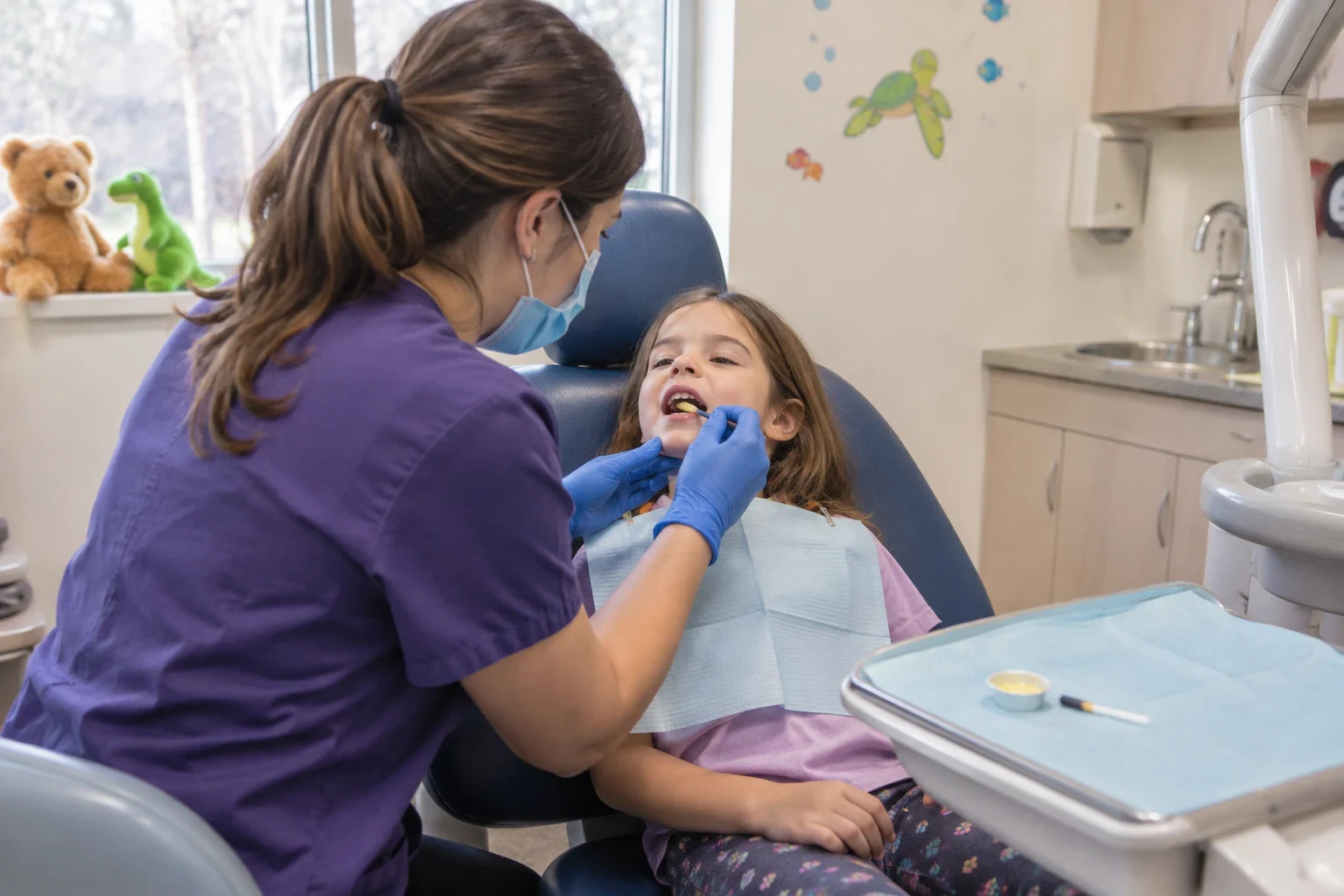
Fluoride varnish takes about a minute, involves no needles or drills and helps your child's enamel hold up against the acids that start cavities. We apply it gently at regular visits and explain why it is one of the lowest-cost ways to protect healthy teeth.
A small step that protects teeth for years
Fluoride treatment is a thin, sticky varnish we brush onto your child's teeth. It sets as soon as it meets saliva and keeps releasing fluoride into the enamel for several hours. That fluoride helps rebuild the earliest soft spots before they turn into holes, and it makes the surface harder for acids to wear down.
We think about it the way you might think about a good coat of finish on wood. It costs little up front, it needs only a quick reapplication every few months, and it reduces the chance of paying later for fillings or pediatric crowns. For kids who are prone to cavities, that tradeoff is usually easy to make.
It works alongside the fluoride in toothpaste and tap water, not instead of them. Some families in the area are on private wells, where fluoride levels vary, and in-office varnish helps fill that gap.
What a fluoride treatment includes
A quick look first
We check the teeth before anything is applied. Early white spots, deep grooves and areas where plaque collects tell us where the varnish matters most.
Drying the teeth
We wipe or air-dry each section with gauze so the varnish sticks well. Little ones can sit on a parent's lap for this part.
Painting on the varnish
A small brush coats every surface in a thin layer. The amount used is tiny, roughly a drop or two, and it hardens on contact so very little is swallowed.
Aftercare in plain terms
Before you leave, we go over what your child can eat and when to brush again. You get the instructions in a short, clear form you can actually remember on the drive home.
A schedule that fits your child
We suggest how often to repeat the treatment based on your child's cavity risk, not a one-size rule. Some kids benefit from every visit; others need it less often.
When fluoride treatment is worth it
- Faint white patches
- Matte, white areas along the edge of the gums often mean the enamel is starting to lose minerals. Fluoride can help those spots firm up again before a cavity forms.
- A recent cavity
- If your child has needed a filling in the past year, the risk of another one is higher. Regular varnish is a sensible way to slow that pattern down.
- Frequent snacks or sippy cups
- Juice, milk at bedtime and steady grazing keep teeth bathed in sugar. Varnish gives the enamel extra protection while habits are being adjusted.
- Braces or crowded teeth
- Brackets and tight spaces trap plaque that is hard to brush away. Older kids and teens in this stage often benefit from added fluoride.
- Well water or bottled water
- If your family drinks water with little or no fluoride, your child may be missing a protection many kids get daily. Let us know at the visit and we can plan around it.
How the visit goes
- 1
Settling in
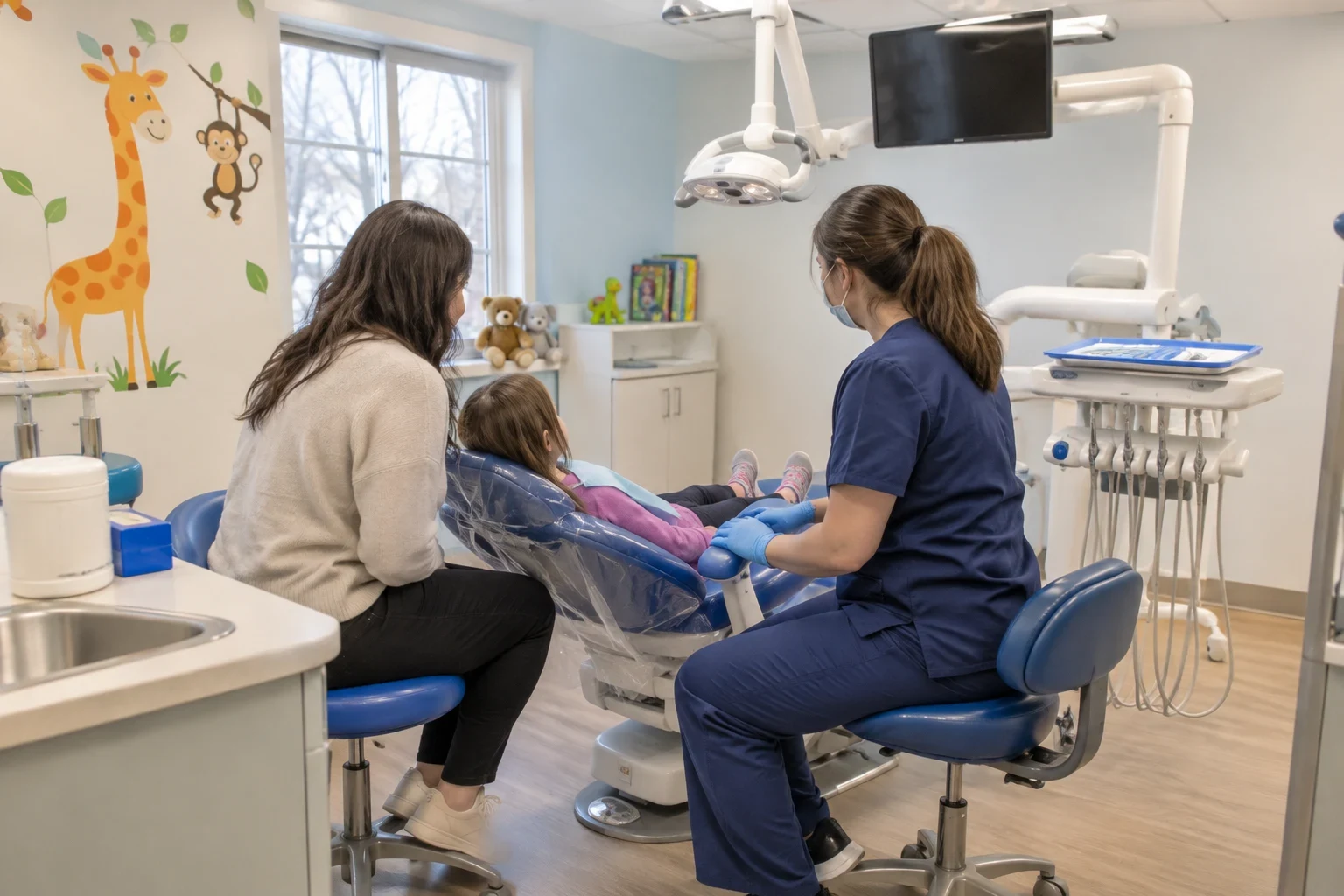
We start at your child's pace with a short, friendly introduction to the chair and the tools. For a toddler, that may simply mean counting teeth together.
- 2
Cleaning and checking
Fluoride usually follows an exam and cleaning, so the varnish goes onto clean enamel. If we spot something that needs attention, we tell you plainly and talk through options.
- 3
Applying the varnish
The coating goes on in under a minute. Most kids notice only a mild taste and a slightly smooth feeling on their teeth.
- 4
Heading home
Soft foods and cool drinks are fine shortly after you leave. Hold off on anything hot, crunchy or sticky for a few hours, and save brushing for the following morning so the fluoride can soak into the enamel overnight.
What shapes the cost of fluoride varnish
Fluoride varnish is one of the more modest items on a child's dental bill, and it usually rides along with a routine checkup. What you pay depends mostly on your coverage and on how often your child's enamel needs the help. Most insurance plans are welcome here, and we take Visa, Discover and MasterCard cards. Families who would rather spread costs out can use the CareCredit Patient Payment Plan, and we are glad to go over any of it by phone.
- What your plan covers
- Many dental plans include fluoride for children, though they often cap it by age and by the number of applications per year. We can help you look over your benefits before the appointment so the bill matches what you expected.
- How often your child needs it
- A child with a higher cavity risk may do better with varnish every three months rather than twice a year. Those added visits carry a cost, but it is usually far smaller than treating new cavities.
- The rest of the visit
- When varnish follows an exam and cleaning, the appointment covers more ground. A visit for fluoride alone is shorter and simpler.
- Your child's age
- Some plans stop covering fluoride after a certain birthday. Knowing where that cutoff sits lets you plan ahead for the teen years.
What parents ask us about fluoride
- Can my baby or toddler have fluoride varnish?
- They can, and it is often suggested as soon as the first teeth appear. The dose is very small and the coating firms up within moments, so your child swallows very little. We measure the amount to suit your child's age and size.
- Why do my child's teeth look yellow after the treatment?
- Certain varnishes leave a light yellow or cloudy film on the teeth. It is only on the surface and comes off with the next morning's brushing. The enamel itself is not stained.
- Can too much fluoride cause problems?
- The faint white streaks parents sometimes read about usually come from swallowing toothpaste day after day while adult teeth are still forming, not from varnish at our office. We can show you how much toothpaste suits your child's age. Most parents are surprised at how little it is.
- Does fluoride replace sealants?
- No, each does a different job. Fluoride strengthens the smooth surfaces of every tooth, while sealants cover the deep grooves on back teeth that a toothbrush cannot reach. Many kids benefit from both, and you can read more on our Sealants page or ask us at the visit.
- How long does the protection last?
- The visible coating is gone within a day, but the fluoride it leaves in the enamel keeps working for weeks to months. That is why we repeat it at regular checkups instead of treating it as a one-time fix.
Give your child's enamel a stronger start
A short phone call gets your child registered as a new patient and on the schedule. We will answer your questions about fluoride and insurance while you are on the line.